
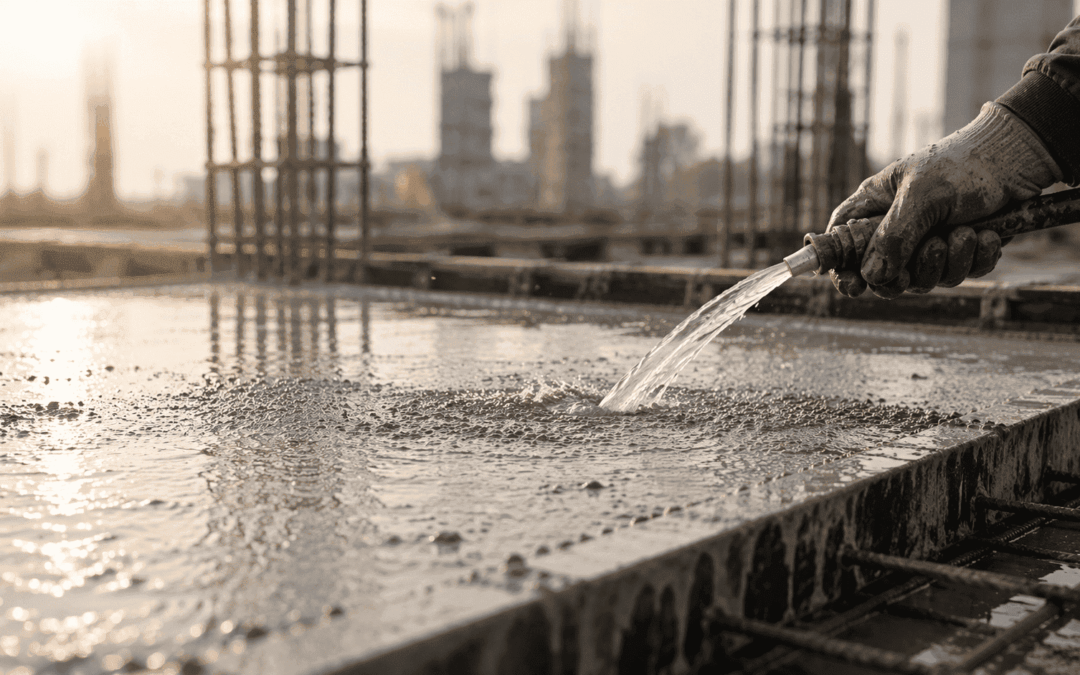
Concrete curing is one of the most important stages in the construction process. Although it is sometimes overlooked by homeowners, proper curing directly impacts the strength, durability, and long-term performance of a building.
In high-quality residential construction, curing is treated as a critical engineering process rather than a routine site activity. It forms the foundation upon which safe, durable, and premium homes are built.
What Is Concrete Curing?
Concrete curing is the process of maintaining adequate moisture and temperature in concrete after it has been poured. This allows cement hydration to continue properly, helping the concrete achieve its intended strength, durability, and structural performance. Without proper curing, concrete can lose moisture too quickly, resulting in weaker structural elements and reduced long-term reliability.
Why Proper Concrete Curing Matters
Concrete gains strength gradually over time. Proper curing allows the material to develop its full structural capacity and perform as intended throughout the life of the building.
Well-cured concrete contributes to:
- Higher structural strength
- Better durability
- Reduced surface cracks
- Improved resistance to weathering
- Longer building life
This is especially important in luxury homes and premium residential developments, where long-term quality and structural reliability are expected to match the standards of the architecture, finishes, and overall living experience.
What Happens If Concrete Is Not Properly Cured?
Improper curing can create several long-term problems within a building’s structure.
These may include:
- Surface cracking
- Reduced compressive strength
- Dusting and surface weakness
- Poor durability
- Increased water penetration
Many construction defects originate during the early stages of execution, which is why disciplined curing practices remain essential in quality-focused residential projects.
The durability of a home is often determined long before any aesthetic finishes are installed.
Common Concrete Curing Methods
Professional construction teams use different curing techniques depending on site conditions, structural requirements, and project specifications.
- Water Curing
Continuous water application helps maintain moisture levels and supports proper cement hydration.
- Ponding
Water is retained on slab surfaces for a specified duration to ensure consistent moisture retention.
- Wet Coverings
Wet hessian cloth, burlap, or curing blankets help prevent rapid moisture loss from exposed concrete surfaces.
- Chemical Curing Compounds
Specialized curing compounds are sometimes applied to reduce evaporation and preserve moisture within the concrete.
Why Curing Is Important in Luxury Residential Construction
Luxury residential projects often receive attention for their premium finishes, spacious layouts, and aesthetic appeal. However, the true quality of a home begins with strong structural execution.
Proper curing helps ensure:
- Better slab performance
- Improved structural stability
- Reduced future maintenance requirements
- Stronger foundations for interiors and finishes
- Greater long-term durability
Whether constructing luxury builder floors or premium homes, engineering discipline during the structural phase has a lasting impact on the quality of the finished residence.
Engineering Discipline Creates Better Homes
Construction quality is the result of consistent execution at every stage of the process.
While homeowners may never directly see curing activity, it plays a significant role in ensuring the safety, reliability, and longevity of a building. It is one of the many technical practices that contribute to the creation of high-quality homes designed for modern living.
In luxury real estate, attention to detail extends beyond visible finishes. Thoughtful architecture, quality materials, and disciplined engineering practices work together to create homes that perform as beautifully as they look.
Strong homes are built through patience, precision, and proper engineering practices.