
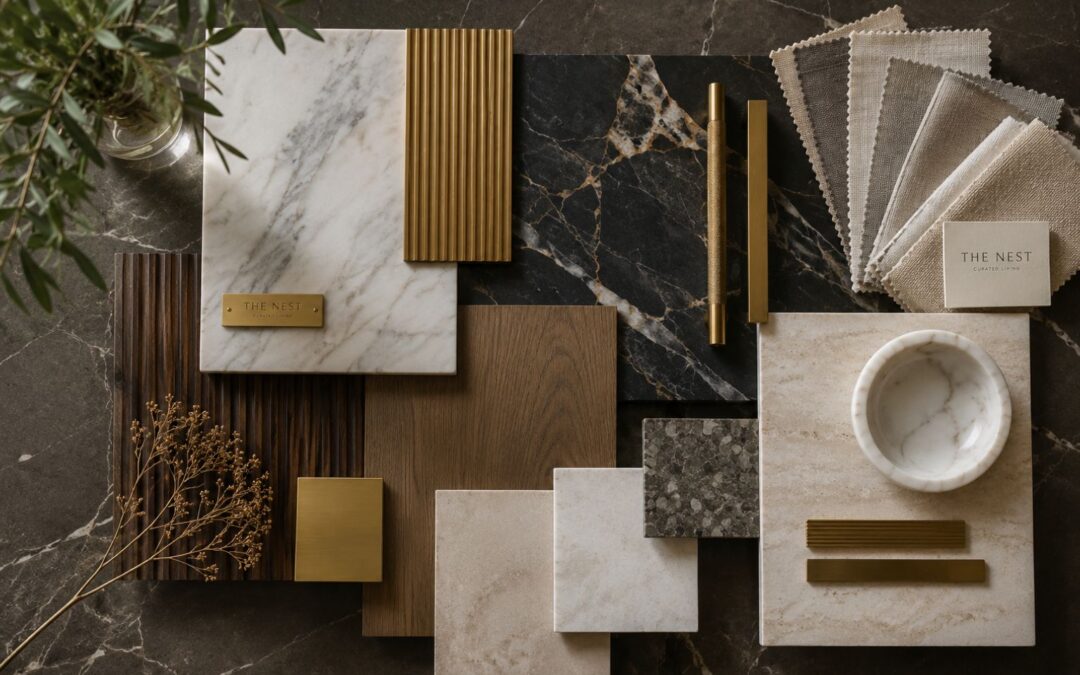
There are a few materials we naturally associate with luxury.
- Italian marble
- Imported fittings
- Natural wood veneers
- Premium quartz
- Designer lighting
While these materials are undeniably important, they represent only a fraction of what makes a home feel truly premium.
A well-designed home is not created by simply selecting the most expensive material available for every surface. Instead, it is shaped by a more nuanced set of decisions:
- Where each material is used
- How it will age over time
- How it responds to natural and artificial light
- How it feels in daily use (not just visually, but physically)
- How it contributes to the overall rhythm of living in the home
At The Nest, every finish is selected with intent.
Because every room places a different demand on the materials within it.
The Living Room: Creating a Lasting First Impression
The living room is the most public-facing space in a home. It is where guests are welcomed, celebrations unfold, and everyday life is quietly observed.
This space requires balance:
- Strong visual identity, but not visual overload
- Premium materials, but not excessive layering
- Detail, but not distraction
Flooring: Consistency and Light Play
For living room flooring, we often use imported Italian marble because of its:
- High slab-to-slab consistency
- Subtle, controlled veining patterns
- Strong durability for high-traffic areas
- Natural ability to reflect daylight across large spaces
Unlike lower-grade stone, where variation can feel visually fragmented, premium Italian marble allows:
- Seamless visual continuity across open layouts
- A calmer, more expansive spatial perception
- Better interaction with natural light throughout the day
Feature Walls: Layering, Not Overloading
Instead of relying on a single dominant material, we build depth through layering:
- Natural stone (used selectively, not excessively)
- Fluted oak or engineered wood panels
- Brushed brass in controlled accents
- Textured lime plaster for soft diffusion of light
Each material responds differently to light.
Together, they create a room that feels dynamic without feeling busy.
The Kitchen: Built for Real Life
A kitchen is defined by how it performs over time. Not how it looks on day one. It must remain durable, practical, and easy to maintain through constant daily use, while retaining an understated, refined aesthetic that never feels overdesigned.
This is why we prioritise:
- Durable, low-maintenance surfaces like premium quartz or equivalent engineered materials
- Finishes that resist stains, heat, and everyday wear
- Clean, understated cabinetry that balances function with visual calm
- Reliable hardware that ensures smooth, consistent operation over years
Luxury in a kitchen is not visual excess. It is long-term reliability, ease of use, and quiet confidence in every detail.
Bedrooms: Warmth Over Spectacle
Bedrooms are not designed to impress guests. They are designed to restore the people who live in them.
This shifts the material strategy completely.
Core Material Palette
We prioritise materials that create softness and calm:
- Natural wood veneers for warmth and grounding
- Engineered hardwood for stability and consistency
- Upholstered wall panels for acoustic comfort
- Matte finishes to reduce visual glare
- Soft textiles layered into headboard and seating areas
Why Wood Matters Here
Wood is not just decorative – it is psychological.
It helps:
- Balance colder materials like glass and stone
- Reduce visual sharpness in the room
- Create a sense of enclosure and comfort
A veneer is never selected based on a sample alone. It is evaluated in context – how it shifts tone, warmth, and depth throughout the day.
Bathrooms: Materials That Handle Moisture Gracefully
Bathrooms are among the most technically demanding spaces in a home.
They must withstand:
- Constant humidity
- Water exposure
- Cleaning chemicals
- Temperature fluctuations
- Daily wear on wet surfaces
Material Strategy by Zone
We divide bathroom materials by function:
- Walls: Large-format porcelain or stone-inspired finishes for continuity
- Floors: Anti-skid surfaces prioritising safety
- Vanity tops: Engineered quartz or sealed stone for durability
- Shower areas: Fully waterproofed systems beneath finishes
Metal Finishes: More Than Aesthetic Choice
We often use:
- Brushed brass
- Fluted brass
- Matte black accents (selectively)
Brushed finishes are preferred because they:
- Age gracefully
- Conceal wear better
- Maintain a softer visual presence over time
A bathroom should not degrade visually with use—it should mature.
Natural Stone Is Never Just Stone
One of the most misunderstood aspects of luxury construction is sourcing.
Even within the same category:
- Italian marble varies significantly by quarry
- Travertine differs in density and porosity
- Granite varies in grain structure and strength
What We Evaluate Before Selection
Our designers assess:
- Colour consistency across slabs
- Veining direction and flow
- Surface integrity
- Structural stability
- Book-matching potential
- Long-term durability
This ensures large spaces feel unified, not fragmented.
Most of this detail is not consciously noticed—but it is always felt.
The Right Finish in the Wrong Place Is Still the Wrong Finish
A common misconception in luxury design is that premium materials are universally applicable.
They are not.
Examples:
- Polished marble in wet bathrooms → unsafe
- Natural wood in high-moisture zones → unstable
- Certain stones outdoors → weather-sensitive
Our Selection Framework
We evaluate:
- Sunlight exposure
- Humidity levels
- Usage intensity
- Maintenance expectations
- Long-term ageing behaviour
Luxury is not about using the best material everywhere.
It is about using the right material in the right place.
Every Finish Has a Purpose
When someone enters a Nest home, they may notice:
- The marble underfoot
- The warmth of wood panels
- The subtle brass detailing
But what they are actually experiencing is not individual materials.
It is the result of hundreds of layered decisions working together:
- Material selection
- Placement strategy
- Light interaction
- Functional durability
- Long-term ageing behaviour
Luxury is not about selecting expensive materials from a catalogue.
It is about understanding:
- Where each material belongs
- How it behaves in real life
- How it supports the architecture around it
- How it improves everyday living over time
At The Nest, every home is designed this way.
Not as a collection of products.
But as a carefully curated experience.
Explore our collection of thoughtfully designed premium homes in Gurgaon: Ongoing Projects | the nest Developers