
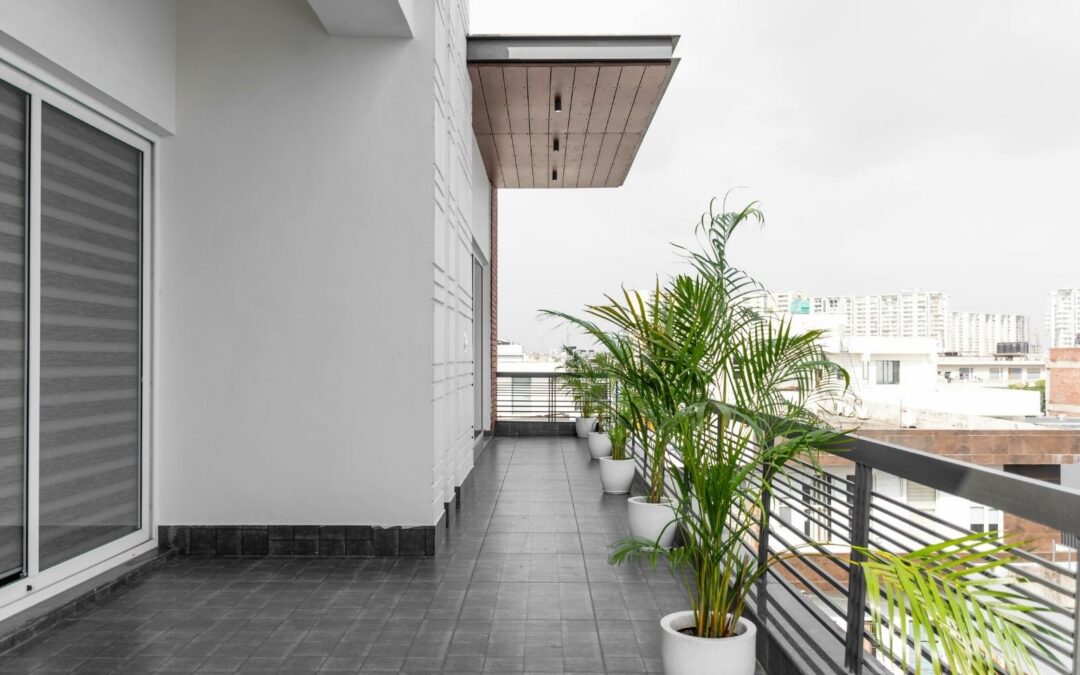
A balcony can add a great deal to the appearance of a home, but its real value begins when it becomes a space you actually want to use.
A place for morning coffee, a quiet evening outside, a few comfortable chairs for conversation, or simply somewhere to step out for fresh air. At The Nest, balconies are planned as extensions of the spaces around them, not simply as facade features.
For a balcony to become part of everyday life, it needs the right proportions, privacy, shade, materials and connection to the room inside.
Depth Makes the Difference
One of the biggest factors determining whether a balcony gets used is its depth. A narrow balcony may look good from outside, but once furniture is introduced, movement can become awkward. A more generous balcony allows the space to function like a genuine outdoor room.
There should be enough space to:
- Place comfortable outdoor seating without blocking circulation
- Introduce planters while keeping the space open
- Open doors and move comfortably around furniture
- Create a proper seating arrangement rather than simply lining chairs against a wall
- Spend time outside without feeling pressed against the railing
In a luxury home, outdoor space should feel deliberate and generous rather than like leftover area around the building.
Connecting the Balcony to the Room Inside
The best balconies feel naturally connected to the interiors.
Large French windows and glazed openings can create a strong relationship between a living room, bedroom or family lounge and the balcony beyond. Even when the doors are closed, the outdoor area adds visual depth and makes the room feel more open.
Furniture planning matters too. Indoor seating can be positioned to enjoy the balcony and the view beyond, while the balcony itself can be arranged to feel visually connected to the room.
When the weather is pleasant and the doors are opened, the distinction between inside and outside becomes softer. The balcony begins to feel like another part of the living space.
Shade and Privacy Make It More Comfortable
Delhi NCR’s climate makes shade particularly important.
An exposed balcony that receives harsh direct sunlight for hours can become difficult to use for large parts of the day. Architectural projections, overhangs and recessed balcony designs can provide protection while still allowing daylight and airflow into the adjoining rooms.
Privacy deserves equal attention. In residential neighbourhoods, nearby homes can sometimes overlook balconies directly, so good design needs to create openness without making the space feel exposed.
This can be supported through:
- Side walls or architectural screens
- Thoughtful balcony orientation
- Planters and greenery used as soft visual barriers
- Seating positioned away from direct neighbouring sightlines
- Balcony geometry that naturally creates more private corners
The goal is not to enclose the balcony. It is to give people enough privacy that they actually feel comfortable spending time there.
Greenery Should Feel Integrated
Plants can completely change the character of a balcony, particularly in an urban setting.
But greenery works best when it has been considered alongside seating and circulation. Large planters, layered foliage and carefully positioned greens can soften the architecture without making the space feel crowded.
There is a real difference between a balcony with plants and a balcony designed to accommodate greenery. The latter allows plants to become part of the composition of the space, rather than filling whatever empty corners remain after the furniture has been placed.
This is another reason why generous proportions matter. Seating, greenery and movement should all be able to coexist comfortably.
The Practical Details Matter Just as Much
A balcony is an outdoor space, which means it has to perform through heat, rain, dust and changing weather.
During Delhi NCR’s monsoon season in particular, drainage and waterproofing become critical. The finished balcony may look simple, but several technical decisions sit underneath it.
Good balcony design needs to consider:
- Correct flooring slopes towards drainage points
- Proper waterproofing beneath the finished surface
- Suitable outdoor flooring with adequate grip
- Durable materials that can handle exposure
- Drain positions that prevent water from collecting around doors or walls
These may not be the details someone notices when first looking at the balcony, but they determine how comfortably the space can be used over time.
Lighting Extends Its Use Into the Evening
A balcony should not stop being useful when daylight disappears.
Subtle architectural lighting can make the space far more inviting after sunset. Instead of excessively bright lighting, the objective is to create enough illumination for comfortable seating while maintaining the softer atmosphere of an outdoor space.
Lighting can also highlight greenery, textured walls or architectural details, making the balcony feel visually connected to the interiors even when viewed from inside at night.
Combined with comfortable seating and thoughtful landscaping, this can turn the balcony into one of the most enjoyable spaces in the home during Delhi NCR’s more pleasant evenings.
Designing Outdoor Space for Everyday Life
The most successful balconies are not necessarily the ones that photograph best from the street. They are the ones that become part of a family’s routine.
Their value comes from a combination of generous proportions, comfortable seating, greenery, privacy, shade, good drainage and a natural connection to the interiors.
At The Nest, balconies are therefore considered with the same attention to proportion and usability as the spaces inside the home.
Because outdoor spaces should not simply complete the architecture of a home. They should add something meaningful to the way you live in it.
To see how thoughtful architecture and indoor-outdoor living come together across our completed homes, explore our projects at thenestdevelopers.com/completed-projects.