
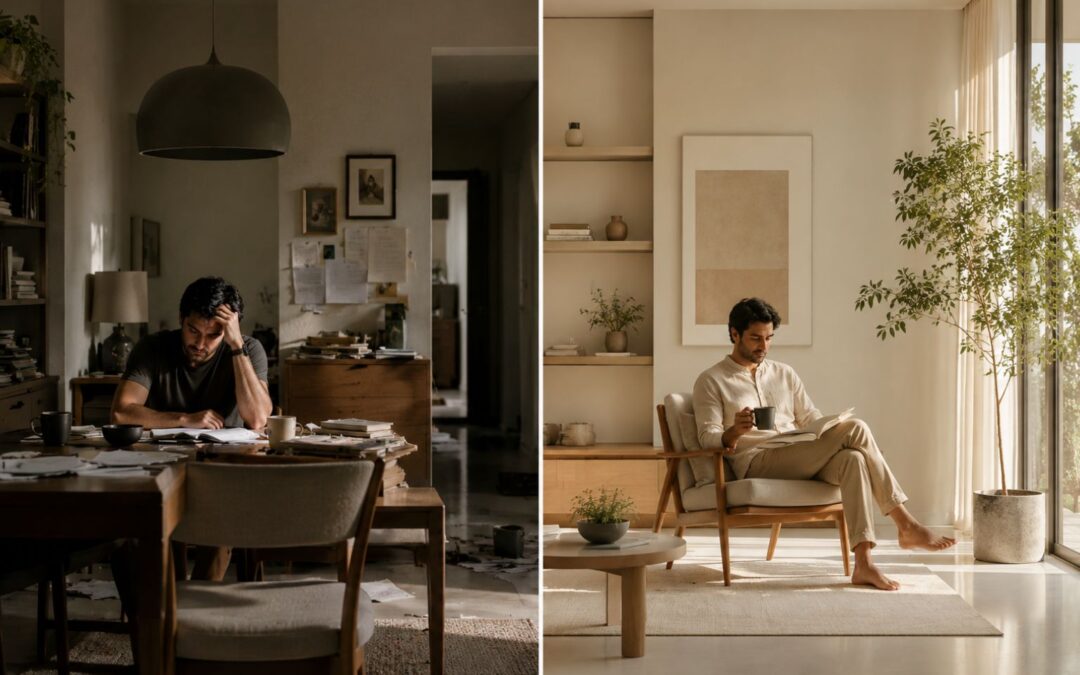
Most people associate stress with work, traffic, deadlines, or busy schedules. Rarely do we consider the role our homes play in how we feel every day.
Yet, think about the small frustrations that quietly become part of daily life. Walking into a cluttered room. Struggling to move around furniture. Constantly switching on lights because parts of the home feel dark. Hearing noise from every corner of the house. Searching for storage because there never seems to be enough.
Individually, these moments seem insignificant. Together, they shape the experience of living in a home.
Good residential architecture is not just about creating beautiful spaces. It is about reducing these everyday points of friction. The best premium homes are designed to make daily life feel calmer, simpler, and more intuitive without homeowners even noticing why. Let’s take a look at some of the important factors here.
Less Clutter
A cluttered home is not always the result of owning too many things.
More often, it is the result of poor planning.
When homes lack adequate storage, everyday items are gradually permanently placed on countertops, dining tables, bedroom corners, and living room shelves. Over time, even spacious homes can begin to feel crowded.
Thoughtful home design integrates storage into the architecture itself rather than treating it as an afterthought. Built-in wardrobes, utility storage, linen cabinets, kitchen organisation, and concealed storage solutions help maintain visual order throughout the home.
Easier Movement through Thoughtful Layouts
The way people move through a home has a significant impact on everyday comfort.
Poor layouts create unnecessary interruptions. In badly planned layouts, furniture blocks circulation, hallways feel narrow, kitchens become congested, and people constantly cross paths while carrying out daily routines.
Good architecture creates natural movement between spaces. The transition from the entrance to the living room, from the kitchen to the dining area, or from private bedrooms to shared spaces should feel effortless.
Good circulation creates logical relationships between rooms. Kitchens should connect naturally to dining areas, bedrooms should remain private, and common spaces should encourage interaction without feeling crowded.
Well-planned movement creates:
- Comfortable circulation between rooms
- Better furniture layouts
- Fewer bottlenecks during busy hours
- A home that feels more spacious
Lighting
Natural light affects far more than the appearance of a home.
Well-lit spaces often feel more welcoming, more spacious, and more comfortable throughout the day. Access to natural daylight can also reduce dependence on artificial lighting while creating healthier indoor environments.
Achieving this requires careful architectural planning. Window placement, room orientation, balcony design, and surrounding buildings all influence how daylight enters different parts of a home.
In the Indian climate, the objective is not simply to maximise sunlight, but to bring in comfortable daylight while limiting excessive heat and glare.
Homes designed around natural daylight usually offer:
- Brighter living spaces
- Reduced dependence on artificial lighting
- Better visual comfort throughout the day
- A more inviting indoor environment
Noise Reduction
Noise can travel through poorly designed layouts, lightweight partitions, plumbing systems, windows, and even hard surface finishes.
Good architecture considers acoustics from the beginning. Bedroom placement, wall construction, plumbing routing, window specifications, and the positioning of mechanical equipment all influence how sound moves through the home.
For families working, studying, or relaxing under the same roof, these decisions can make a noticeable difference to everyday comfort.
Good acoustic planning helps provide:
- Quieter bedrooms
- Reduced plumbing and service noise
- Better separation between active and quiet spaces
- A more peaceful living environment
Visual Calm
Some homes feel busy even when they are perfectly clean.
This often happens because too many architectural elements compete for attention. Inconsistent materials, unnecessary design features, poor alignment, and disconnected spaces create subtle visual distractions.
The key is to focus on balance rather than excess.
Consistent material palettes, clean sightlines, thoughtful proportions, and restrained detailing create interiors that feel composed and comfortable instead of overwhelming. Visual calm is not about minimalism. It is about designing spaces where every element feels intentional.
This is often achieved through:
- Consistent materials and finishes
- Clean architectural lines
- Balanced proportions
- Thoughtful coordination between spaces
Good Homes Make Everyday Living Feel Easier
Homes are often judged by how a home looks on the day of possession. Its real success, however, is measured by how it supports the people living in it every single day.
Less clutter, intuitive movement, better daylight, comfortable circulation, quieter interiors, and visually balanced spaces all contribute to a home that feels easier to live in. These are not luxury features. They are the result of thoughtful planning and good architectural decisions made long before construction begins.
At The Nest, these principles guide every project from the earliest design discussions. Working closely with experienced architects and designers, every home is planned to improve everyday living through practical layouts, careful detailing, and timeless residential architecture.
To see an example of this, check out 282, 283 Astaire Gardens to see how thoughtful design and carefully planned spaces come together: