
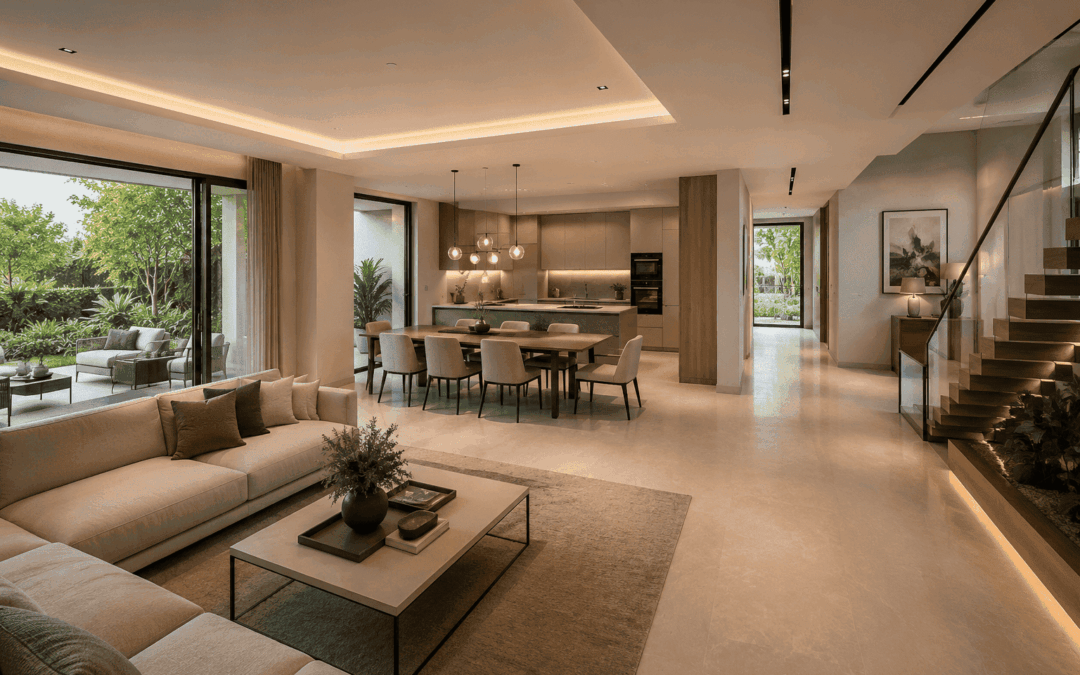
A well-designed home should feel effortless to live in. While premium materials and beautiful interiors often attract immediate attention, the way people move through a space has an equally important influence on comfort and functionality.
In modern luxury homes, thoughtful planning goes beyond aesthetics. Every room, corridor, doorway, and transition should support natural movement, allowing residents to navigate their homes comfortably and intuitively. This principle plays a central role in residential architecture and significantly influences the quality of modern living.
Many of the most comfortable homes share a common characteristic: they are designed around the people who live in them. Rather than treating floor plans as a collection of rooms, thoughtful residential architecture considers how residents move, interact, relax, work, and spend time together throughout the day.
This human-centered approach has become increasingly important in modern luxury homes, where comfort is often defined less by square footage and more by how naturally a home supports everyday living.
The difference between a good layout and a great one often lies in how naturally spaces connect, how transitions are managed, and how movement patterns are considered long before construction begins.
Designing Around Daily Routines
Every household follows predictable patterns.
People return home carrying bags, move between bedrooms and bathrooms in the morning, prepare meals while interacting with family members, and transition between work, relaxation, and social activities throughout the day.
Thoughtful residential architecture studies these routines and designs spaces around them.
For example:
- Entry points should provide a natural transition from public to private space.
- Kitchens should allow efficient movement between storage, preparation, and cooking zones.
- Bedrooms should be positioned away from high-traffic circulation paths.
- Workspaces should remain accessible without disrupting family activities.
When these relationships are carefully planned, luxury homes feel more intuitive and enjoyable to use on a daily basis.
Reducing Unnecessary Circulation Space
One of the most overlooked aspects of good architecture is minimizing wasted movement.
Long corridors, awkward room connections, and inefficient layouts can make homes feel smaller and less functional than they actually are. In contrast, thoughtfully designed premium homes prioritize usable living areas rather than excessive circulation space.
Many of the design discussions that happen during the planning stage focus on exactly these details. Small decisions regarding room placement, access points, and circulation routes can significantly influence how a home feels long after construction is complete.
Well-planned homes often reduce unnecessary movement by:
- Allowing rooms to connect logically.
- Creating direct access to frequently used spaces.
- Avoiding dead-end areas.
- Eliminating awkward transitions.
This approach increases usable living space while improving the overall experience of moving through the home.
Designing What You See Before You Enter a Room
Movement is influenced by sight as much as by physical pathways.
For example:
- A glimpse of natural light at the end of a corridor encourages movement.
- Views toward landscaped balconies create visual destinations.
- Strategic openings make spaces feel connected without sacrificing privacy.
- Carefully framed sightlines help spaces feel larger and more inviting.
These details are often invisible to residents, yet they play an important role in creating the sense of comfort associated with luxury living.
Layering Privacy Through Movement
One hallmark of exceptional residential architecture is the gradual transition between public and private spaces.
Rather than opening directly into personal areas, well-designed homes often create layers of privacy.
A visitor may move through:
Entry → Living Area → Family Zone → Private Bedrooms
This progression creates a sense of comfort and separation without requiring physical barriers throughout the home.
Whether designing independent residences or premium builder floors, this balance between openness and privacy contributes significantly to the overall living experience.
Creating Multiple Movement Paths
The most comfortable homes rarely force residents into a single route.
Instead, they provide flexibility.
For example:
- A kitchen that connects naturally to both dining and utility areas.
- A family lounge that links directly to outdoor spaces.
- Bedrooms positioned to reduce cross-traffic through personal areas.
- Service areas designed to function efficiently without disrupting primary living spaces.
These alternative movement paths reduce congestion and improve functionality, particularly for growing families.
Why Spatial Flow Matters More Than Ever
Across Delhi NCR and other growing urban centers, homeowners are increasingly prioritizing layouts that support comfort, functionality, and everyday convenience rather than simply maximizing square footage.
As expectations within luxury real estate continue to evolve, thoughtful spatial planning has become a defining characteristic of premium homes. Homebuyers are recognizing that a home’s value is shaped not only by its finishes and aesthetic design, but also by how effectively it supports daily life.
A well-planned layout improves comfort, enhances usability, and allows residents to enjoy their homes more fully.
The Best Homes Adapt to the People Who Live in Them
Luxury is often associated with finishes, materials, and visual appeal. Yet many homeowners remember something far less tangible.
They remember how a home felt.
Homes that support natural movement create less friction in everyday life. Activities become easier, spaces feel larger, and daily routines become more comfortable.
At The Nest, we often view spatial flow as one of the most important yet least visible aspects of great design. Homeowners may not consciously notice sightlines, circulation patterns, or privacy transitions, but they experience their impact every day through the comfort and ease of living within a well-planned home.
The best architecture does not force people to adapt to a building. Instead, it creates homes that support modern living, enhance comfort, and contribute to the quality of luxury living for years to come.
Thoughtful spatial planning is not simply a design feature. It is a fundamental component of great residential architecture and one of the defining characteristics of truly exceptional homes.